How Much Should Automation Cost?
Publish Date
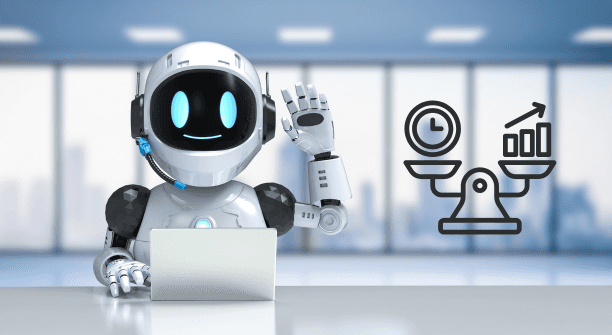
Automating your business processes can feel like a magic wand - faster work, fewer errors, lower costs - but the reality is more nuanced. This post walks through the trade-offs that determine automation cost, how to choose the right scope, and a practical example comparing common approaches to a purpose-built orchestration platform.
Why Scope Matters
Automation scope is the single biggest driver of complexity and cost. Automating a single step inside one application is usually cheap and fast, but it delivers limited value. Real impact comes from automating processes that span multiple systems and teams, because that’s where time savings, error reduction, and scalability compound.
Single-application automation improves usability and reduces repetitive work inside that app.
Cross-system automation reduces handoffs, manual data entry, and cycle time across the whole process.
Legacy or highly customized systems often require specialized technology such as RPA, which increases cost and implementation effort.
Every additional system, data format, or business rule increases integration work and the chance of scope creep. That’s why defining a realistic scope up front is essential.
What You Get For Your Investment
If the budget were unlimited, you’d automate everything. In practice, ROI drives decisions. Two factors most strongly influence whether automation pays off:
Number of systems in scope - more systems means more connectors, more configuration, and more maintenance.
Process volume - higher transaction volumes justify larger investments because per-unit costs fall and savings scale.
Small, well-scoped automations can be inexpensive and deliver quick wins. Large, end-to-end automations deliver the biggest benefits but require careful planning and a larger budget.
Typical Cost Components
Automation projects usually include a mix of these costs:
Licensing and platform fees - per-user, per-feature, or per-transaction pricing from vendors.
Integration tools and middleware - connectors, iPaaS, or custom APIs to move data between systems.
Implementation and configuration - internal or external specialists to design, build, and test workflows.
Maintenance and change management - ongoing support, updates, and rework when systems or processes change.
AI/OCR and specialized models - for document extraction, fuzzy matching, and business-rule automation.
Because these elements interact, total cost ranges can be wide. A simple, single-app automation might cost only a few hundred dollars a year plus a few hours of specialist time. A full enterprise-grade solution that handles legacy systems and complex business logic can reach six figures annually.
Practical example: automating accounts payable (300 invoices/month)
To make this concrete, consider a mid-sized accounts payable process: 300 invoices per month, averaging 4 pages per invoice. Even small organizations in some industries such manufacturing and healthcare will easily go beyond. Key steps include document capture and OCR, business-rule validation and matching, system integration, and implementation/configuration.
Cost drivers and example solutions
Step | What's Involved | Typical Solutions | Typical Annual Cost |
|---|---|---|---|
| Extract vendor, invoice number, dates, line items | Low-end OCR; high-end cloud OCR services | $163 to $150,500 |
| PO matching, vendor resolution, multi-period treatment | Limited built-in app features; custom AI models | $0 to $50,000 |
| Move data between systems, handle APIs or legacy UIs | iPaaS connectors; RPA for legacy systems | $636 to $46,000 |
| Configure workflows, test, train users | Specialist hours or multi-vendor teams | $1,000 to $10,000 |
See assumptions & sources at the end of the blog
This example shows a range of roughly $1,800 to $256,500 per year, illustrating how choices at each step multiply into a wide cost spectrum.
A Different Approach: Orchestration and Managed Services
Instead of stitching many point solutions together, an orchestration platform that includes OCR, connectors, RPA, AI for fuzzy matching, and workflow management can simplify implementation and reduce vendor management overhead.
Benefits of a unified orchestration approach
Single integration layer that connects to existing systems without forcing replacements
Managed services to handle setup, maintenance, and updates so internal teams stay focused on core work
Per-transaction pricing that scales with volume and avoids large upfront licensing and integration fees
Faster time to value because the platform is designed to handle end-to-end processes
For the accounts payable example and using Wrk pricing, a per-invoice managed service model can cost $0.70–$2.00 per invoice, depending on complexity and the systems involved. That pricing converts fixed costs into variable costs and can be easier to justify for growing businesses.
Stitched Solutions | Wrk |
|---|---|
$1,799 to $256,500 For a volume of 300 invoices/month | $3,520 to $8,200 per year
For a volume of 300 invoices/month The price includes a one-off set up fee of $1,000. Thus lowering the cost for subsequent years. |
What Wrk Does Differently
Orchestrates every layer: Wrk combines OCR, connectors, RPA, AI matching, and workflow into a single control plane so data flows from capture to accounting without manual handoffs.
Removes vendor sprawl: Instead of buying separate OCR, iPaaS, RPA, and AI licenses, Wrk provides those capabilities inside one platform, reducing procurement and integration complexity.
Manages change for you: Upgrades to your ERP, accounting, or email systems are handled by Wrk’s managed services so workflows stay intact and downtime is minimized.
Adapts to legacy and modern systems: Wrk uses API connectors where available and RPA where APIs are not, so you don’t have to replace systems to automate.
Prices by outcome: Wrk charges per invoice processed, aligning cost with volume and making ROI easier to forecast for growing businesses.

How to decide what’s right for you
Start with the process and objectives - define the outcomes you want: time saved, error reduction, headcount impact, or faster cycle times.
Map systems and data flows - list every system involved and note integration difficulty. Legacy systems and custom apps are the biggest risk factors.
Estimate volume and variability - higher, stable volumes justify larger investments; low or spiky volumes favor pay-per-use models.
Compare total cost of ownership - include licensing, implementation, maintenance, and the cost of future changes.
Pilot small, scale fast - validate assumptions with a focused pilot before expanding scope.
Conclusion
Automation can be inexpensive and highly effective when scoped correctly, or costly and complex when it tries to solve everything at once. The right approach balances scope, volume, and the organization’s tolerance for vendor and technical complexity. For many businesses, an orchestration platform with managed services offers the best mix of scalability, lower vendor overhead, and predictable costs.
Core assumptions used throughout
Volume: 300 invoices per month → 300×12=3,600 invoices per year.
Pages per invoice: 4 pages → 300×4=1,200 pages per month.
Data size per invoice: 200 KB (used for bandwidth estimate only).
Data Hops: 4 nodes and 3 edges
Implementation blended rate: $100 per hour.
Implementation effort range: 10 to 100 hours (used to estimate configuration/change-management cost).
1) OCR / document extraction
Low-end: ABBYY FineReader — $163 / year.
High-end: ABBYY enterprise / Document AI — median marketplace estimate $150,500 / year
Source: ABBYY Pricing page and https://www.vendr.com/marketplace/abbyy
2) Business rules / AI matching
Low-end: use existing tool features — $0 incremental.
High-end: custom AI model (aiqlabs) — $50,000 (selected as the low end of vendor range).
Source: https://aiqlabs.ai/blog/how-much-does-a-custom-ai-cost
3) Integration / connectors / RPA
Low-end connector (Make Pro 40k credits) — $636 / year.
High-end RPA (UiPath negotiated price example) — $46,000 / year.
Source: Make pricing page & https://www.vendr.com/marketplace/uipath
4) Implementation, configuration & change management
Low-end: 10 hours × $100/hr = $1,000.
High-end: 100 hours × $100/hr = $10,000.
How the low-end total was computed
Add the low-end values for each step:
Low total=163 (OCR)+0 (AI rules)+636 (connectors)+1,000 (implementation)
Low total=163+0+636+1,000=$1,799 / year
How the high-end total was computed
Add the high-end values for each step:
High total=150,500 (OCR enterprise)+50,000 (custom AI)+46,000 (RPA)+10,000 (implementation)
High total=150,500+50,000+46,000+10,000=$256,500 / year
Wrk per‑invoice pricing
Wrk charges $0.70 to $2.00 per invoice (document). For 300 invoices per year:
Annual cost:
Low: 300 × $0.70 x 12 months=$2,520
High: 300 × $2.00 x 12 months=$7,200
First-year cost including one-off setup ($1,000):
Low first year: 2,520+1,000=$3,520
High first year: 7,200+1,000=$8,200.
Bandwidth / data volume check (supporting assumption)
The document estimates data transfer for 300 invoices/month at 200 KB each across 3 edges and back-and-forth:
Monthly bytes=300×3×2×200 KB=360,000 KB≈352 MB
This is a rough network sizing figure to show that document transfer volumes are modest at this scale.
Pricing numbers accurate as of the date of publishing