Building Automations Without Work: The Real Business Process Automation Cost
Publish Date
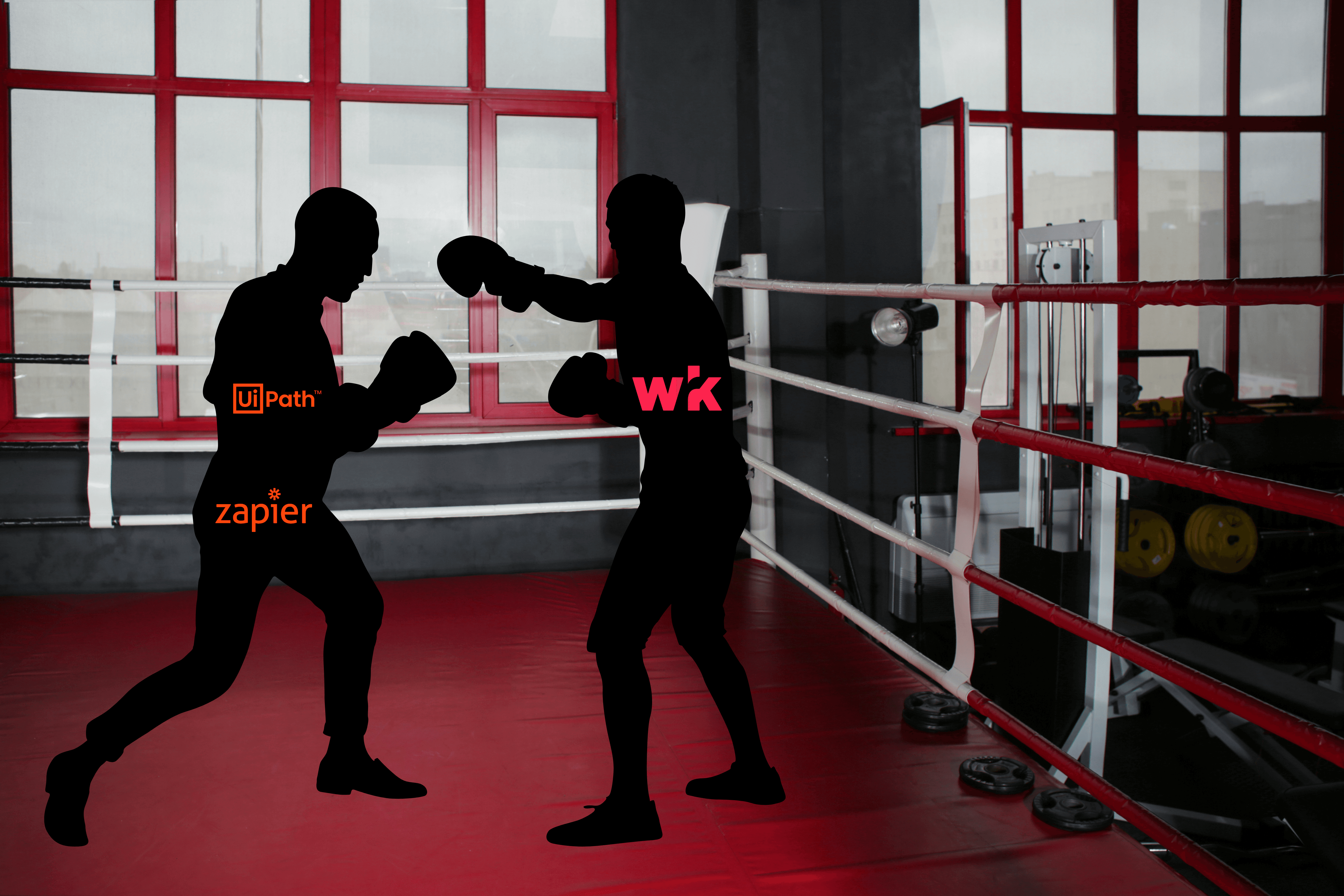
As businesses grow, manual processes start eating up valuable time, and building automation in-house can quickly become costly. Between bots, AI tools, and integrations, the business process automation cost adds up fast. Wrk simplifies everything with one platform that combines AI, RPA, and human-in-the-loop automation for predictable pricing and seamless efficiency. Let’s dive into the true cost of business process automation, and how to find the most cost-effective solution for your unique workflows.
Why Traditional Automation Stacks Get So Costly
1. Fragmented Licensing & Usage Fees
Many automation tools charge separately for workflow connectors, task-based usage, unattended bots, and AI/ML add-ons. For example:
A platform like Zapier starts at ~$19.99/month for “Professional” plan, but the cost climbs significantly as task counts, triggers, or multi-step Zaps go up.
A heavyweight RPA vendor like UiPath uses complex license models, many tiers, and adds cost for document understanding, unattended bots and enterprise governance.
Each of these “modules” (connectors + bots + AI + doc-processing) often means additional licenses, per-usage costs, or consumption fees.
2. Implementation, Integration & Maintenance Costs
License cost is only the beginning. When you purchase multiple point solutions, you also incur:
Consulting or internal staffing to build and integrate each tool
Custom scripts, connectors, and maintenance when one vendor updates APIs
Monitoring, support, and governance across platforms
These overheads inflate the true automation software pricing far beyond the published sticker.
3. Scaling and Hidden Overages
With modular stacks, scaling tends to amplify cost:
Task-based pricing (e.g., Zapier) means a burst of activity can push you into a higher band.
RPA platforms may require more bots, more licenses, more capacity, and more governance as usage grows.
Additional AI or document processing modules may kick in once volume or complexity escalates.
You want workflow automations that make your day-to-day easier and improve your bottom line. When you scale with other automation platforms, the cost of business process automation becomes unpredictable, which is bad for budgeting.
Putting Numbers to It: A Competitive Pricing Comparison
Component | Typical Vendor Example | Published / Typical Pricing* 3 | What this means for you |
|---|---|---|---|
Workflow/Connector Tool | Zapier – Professional plan | From ~$19.99/month (~750 tasks) | Good for light usage; cost grows rapidly with volume |
RPA Platform | UiPath – Entry or scaling tier | Complex; many quotes $420/month and up for one unattended bot | High baseline cost; additional modules add much more |
Document/AI Add-ons | UiPath/IaaS models | Usage-based (units/consumption) | Hard to forecast; hidden spikes possible |
Maintenance & Integration | Consulting, staffing, upkeep | Often $10k-$100k+ on top for SMBs | Real cost is far more than just license fees |
*Figures are approximate; vendor quotes vary with negotiation, scale, and services.
The bottom line: Even a modest stack (connectors + RPA + basic AI) can cost thousands of dollars a month and tens of thousands in setup. This demonstrates how expensive building automations without Wrk becomes.
How Wrk Changes the Equation With A Unified Platform & Lower Total Cost
With Wrk, the narrative shifts: you get a unified platform that includes connectors/API integrations, RPA bots, document/OCR processing, AI logic, and human-in-the-loop flexibility — all under one roof. This means:
One vendor, one contract — fewer admin overhead, fewer integration headaches.
Transparent, usage-oriented pricing — instead of stacking dozens of licenses, you pay for outcomes.
Built-in features — no need to buy a separate RPA license, separate AI engine, separate OCR service.
Faster time to ROI — fewer moving parts means quicker deployment, less consulting/maintenance cost.
In other words: you avoid the multiple-tools + integrations + hidden costs stack that drives up the business process automation pricing when you build it yourself.
Predictable Pricing + Measurable ROI
Predictability is key. With traditional stacks, you’re budgeting for lisences but often end up with surprise costs. With Wrk, you get:
Lower upfront cost — fewer point solutions means fewer setup fees and fewer tools to integrate.
Simplified vendor management — support, upgrades, governance all handled in one place.
Scalability without chaos — add workflows or bots without juggling 5-10 separate licenses.
Better maintenance cost — only one platform to maintain and update.
As a result, your ROI reflects not just the automation itself but the lower cost structure, faster deployment, and less upkeep — making the automation ROI much stronger.
Where DIY Automations Fall Short In Today’s World
Multiple dashboards, fragmented data — when you stitch together many tools you end up with disjointed monitoring. Wrk gives unified visibility.
Complex vendor coordination — upgrades, compatibility, support across vendors create delays and extra cost.
Hidden usage spikes — task-based pricing or consumption models can surprise you. Wrk mitigates this by bundling features.
Governance and compliance gaps — enterprise RPA vendors often charge extra for governance modules; Wrk embeds it.
From Cost Avoidance to Value Creation
Finding the best automation workflow solution for you isn’t merely about avoiding high costs, but unlocking valuable time and money. With Wrk you can shift from:
“How much am I spending on licenses and integration? to “How much value am I generating from streamlined workflows, fewer errors, faster throughput?”
By lowering the baseline cost and complexity, you free your team to focus on strategy, growth, and innovation — not admin firefighting.
Don’t Let The Cost of Business Process Automation Blindside You
Curious how Wrk stacks up to a DIY stack of separate tools? Explore our comprehensive business process automation comparison. The cost of business process automation isn’t just what you see on a pricing page — it’s what you pay in license stacking, integration headaches, vendor management, unforeseen usage spikes, and maintenance.
With Wrk you adopt a streamlined, all-in-one solution that keeps pricing predictable, simplifies implementation and boosts your automation software pricing value. If you want to build smarter rather than more expensive, let’s talk.
Book a demo now, and we’ll show you how your cost could look with Wrk instead of the fragmented stack.